
As a percentage in the U.S., the share of adults who have lived with a romantic partner is now higher than those who have been married. Based on a recent Pew Research Center Study, more U.S. adults are delaying marriage. Still, many are forgoing marriage altogether.
Since the 1970s, the percentage of men and women who cohabitated before marriage increased by almost nine times. In the 1970s, only a small fraction of the U.S. population cohabitated with romantic partners. Less than half of one percent cohabitated in the 1970s. Today 70 percent of women aged 30 to 34 have cohabited with a male partner, and two-thirds of new marriages are between couples who have already lived together for more than 2.5 years.
As the data implies, most Americans find cohabitation acceptable, even for couples who don’t plan on getting married. That said, the survey also shows that a narrow majority believe that society is better off if couples in long-term relationships eventually get married.
The survey also examines how adults who are married and those who are not married but cohabitating experience their relationships. It finds that married adults are more satisfied with their relationship and more trusting of their partners than those who cohabit.

While the U.S. share who are currently cohabiting remains far smaller than the share who are married, adults ages 18 to 44 who have ever lived with an unmarried partner (59%) have surpassed the share who has ever been married (50%). Young adults seem to be the most accepting of cohabitation. For adults ages 18 to 29, 78% say it’s acceptable for an unmarried couple to live together, even if they don’t plan to get married.

Based on the Pew Research Center study, the majority of married and cohabiting adults have a fair amount of trust in their spouse or partner to be faithful to them, act in their best interest, tell them the truth, and handle money responsibly. However, married adults are more likely than those who are cohabiting to express a great deal of trust in their spouse or partner in each of these areas. The research shows that married couples express trust significantly more than cohabitating romantic couples.
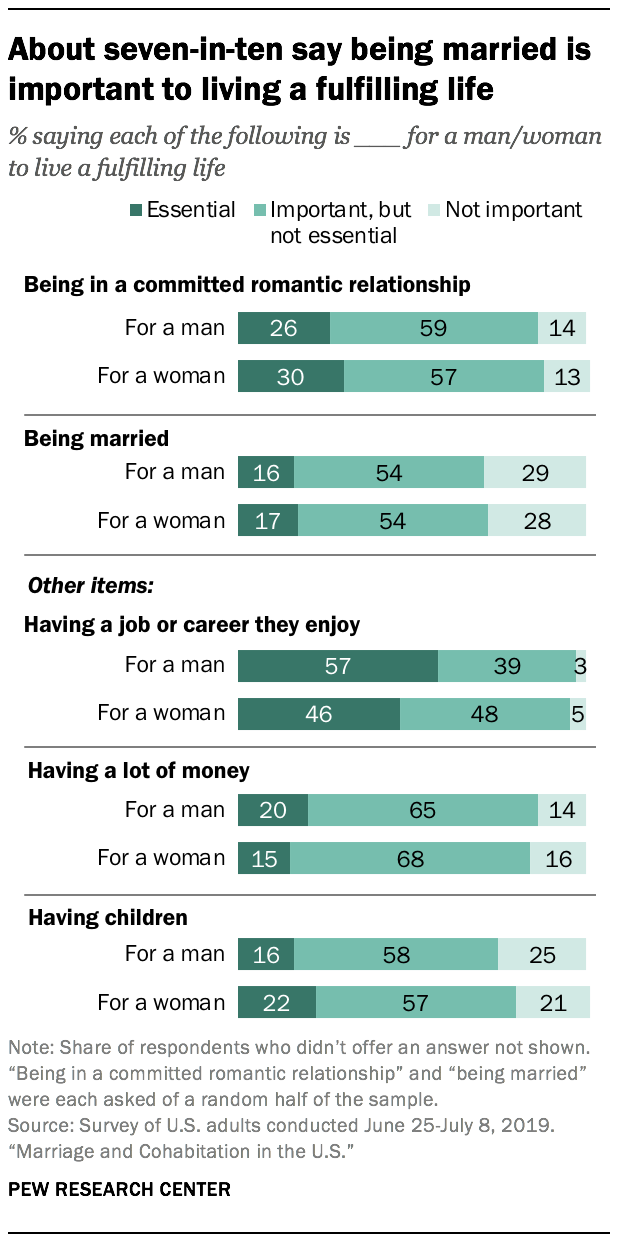
The increase in cohabitation in the U.S. seems to suggest reduced stigma towards premarital sex, delays in the age of first marriage, high living expenses, and other financial factors. For many, cohabitation offers some “short-term benefits”. A new study published in the Journal of Marriage and Family found that those who live together prior to marriage are more likely, not less, to struggle in marriage.
While studies have shown that cohabitation prior to marriage has been shown romantic couples that did not live together first are at higher risk for divorce. This research may infer that cohabiting couples have less of an abrupt transition during the first year of marriage. However, after that first year of marriage, romantic couples who cohabitated before marriage have increased risk relative to those who did not cohabitate prior to marriage.
Despite changing norms and perceptions, premarital cohabitation still appears to be a risk factor for divorce. Regarding premarital cohabitation, Theresa E. DiDonato Ph.D. stated “This doesn’t mean that every romantic couple living together prior to marriage later divorces; nor does it suggest that not living together before marriage guarantees stability. Across all years examined in this study, the odds of divorce were 1.31 times higher for women who cohabitated prior to marriage.”

Closing Thoughts
Marriage still seems to have an edge on cohabitation. The survey shows that 78% of married adults said they “feel closer to their spouse than to any other adult in their life,” compared to only 55% of cohabiting adults who said the same about their cohabitating romantic partner. Importantly, these findings regarding married adults’ higher levels of satisfaction, trust, and closeness held even after Pew controlled for things like gender, age, race, religion, and educational attainment.
About the Pew Research Center Survey
The nationally representative survey of 9,834 U.S. adults was conducted online June 25-July 8, 2019, using Pew Research Center’s American Trends Panel. The survey includes 5,579 married adults and 880 adults who are living with an unmarried partner. It includes married and cohabiting adults in same-sex relationships.
Recovering from Infidelity
If you have experienced infidelity-induced trauma caused by the emotional and sexual betrayal of your spouse, there is hope! If you are a child affected by parental infidelity, there is hope! If you are a spouse who has betrayed the trust, love, and fidelity of your marriage, there is hope! We recommend that you seek support through professional counseling and therapy as well as through groups dedicated to supporting you through this traumatic journey to recovery. You are not alone and recovery and healing are possible!
Share Your Story
The CHADIE Foundation shares personal stories of spouses and children impacted by infidelity and affairs. If you have a story you would like to share and have published, please use the contact information below to share your story with The CHADIE Foundation. Our mission is to help educate everyone about the damage infidelity, affairs, and adultery cause families and how to minimize the impact.
About CHADIE Foundation
The CHADIE Foundation (Children are Harmed by Adultery, Divorce, Infidelity, and related Emotional trauma), helps spouses, partners, and children who have been negatively impacted by adultery, affairs, and infidelity. To learn more about CHADIE and how you can help, please email us at support@chadie.org or us at CHADIE.org.
 The CHADIE Foundation