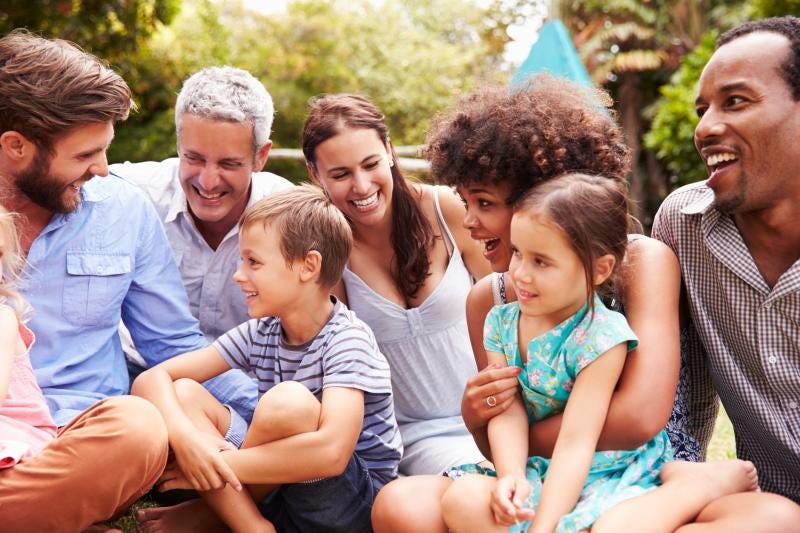
In recent years, the study of family and family dynamics has been formalized through the emergence of family science. Family science is the scientific study of families and close interpersonal relationships.
A strong marriage is a foundation block for a strong family. Stronger marriages generally produce stronger families. Stronger families build stronger societies and nations.
Families are the building blocks of society. Families are responsible for the development of children into adults who will later collectively form our society. As each of us is influenced and formed by our surroundings, so too is our society.
Why is Family Important?
While everyone is born to a mom and dad, not everyone is born into a loving family. The lack of strong, loving families can lead to the decline of modern society. Being part of a strong family, or not being part of one, has a domino effect on the decisions and actions we make and the society we consciously or unconsciously create.
The role of the family in society is to develop in children a sense of love, value, sacrifice, belonging, and shared interest. Through this function of the family, children learn social and life skills — helping them interact and work together for the betterment of everyone and everything. Families are also responsible for educating children and instilling family and social values.
Strong Families Equal Better Mental Health
As part of a family, children learn how to interact properly with their parents and siblings. The family is considered the core of society because it is where its members are most personally affected. Families are the easiest place to instill values and create change. The role of the family in society is to create the foundational building blocks that shape the future of our society.
Many studies show a direct correlation between family time and a child’s mental well-being. The more time children have with their families, the lower their risk of depression. Healthy family relations have a positive effect and can increase mental well-being. However, negative family relationships can trigger mental health issues. Close relationships provide a stable family life that helps children feel safer and more stable.
When families help children establish healthy coping mechanisms and healthy practices such as exercise and mindfulness, they are helping the individuals build resilience. Strong families lead to strong communities and strong communities lead to a strong society. Strong families start in the home and extend into our communities.
Families Teach Purpose and Values
When children are part of a loving family that teaches discipline and family values, they learn right from wrong and develop strong values. These strong family values become the foundation of their character and identity. Values teach us how to treat other people, respect ourselves, and find our purpose.
Recovering from Infidelity
If you have experienced infidelity-induced trauma caused by the emotional and sexual betrayal of your spouse, there is hope! If you are a child affected by parental infidelity, there is hope! If you are a spouse who has betrayed the trust, love, and fidelity of your marriage, there is hope! We recommend that you seek support through professional counseling and therapy as well as through groups dedicated to supporting you through this traumatic journey to recovery. You are not alone and recovery and healing are possible!
Share Your Story
The CHADIE Foundation shares personal stories of spouses and children impacted by infidelity and affairs. If you have a story you would like to share and have published, please use the contact information below to share your story with The CHADIE Foundation. Our mission is to help educate everyone about the damage infidelity, affairs, and adultery cause families and how to minimize the impact.
About the CHADIE Foundation
The CHADIE Foundation (Children are Harmed by Adultery, Divorce, Infidelity, and related Emotional trauma), helps spouses, partners, and children who adultery, affairs, and infidelity have negatively impacted. To learn more about CHADIE and how you can help, please email us at support@chadie.org or visit us at CHADIE.org.
 The CHADIE Foundation