And what does it mean for spouses?
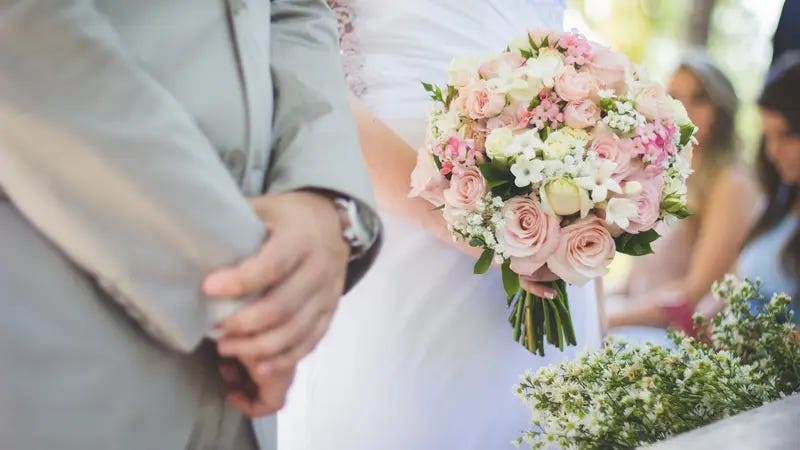
A lot is being said and written — and not being said and written — about marriage these days. Depending on your perspective, the topic of marriage may be quite a controversial topic. If you were raised in a family with an intact marriage, your view of marriage may be quite different than someone who wasn’t. If you were raised in a family where one or both of your parents were unfaithful, you may not have high regard for marriage or believe in its practicality.
To further complicate marriage, for the last decade or so, the definition of marriage has taken on new meaning and change. What was once clearly defined and understood as marriage is now murky and malleable. Many may now ask, ‘What is marriage then?’
What is Marriage?
For the sake of providing a basic definition baseline, let’s review a few dictionary definitions:
The Oxford English Dictionary defines marriage as “the legally or formally recognized union of two people as partners in a personal relationship (historically and in some jurisdictions specifically a union between a man and a woman).”
Other definitions of marriage include:
The state of being united as spouses in a consensual and contractual relationship recognized by law. (Source: Merriam-Webster)
A legally and socially sanctioned union, usually between a man and a woman, that is regulated by laws, rules, customs, beliefs, and attitudes that prescribe the rights and duties of the partners and accords status to their offspring (if any). (Source: Britannica)
In general, marriage is between two consenting adults. But that is also being challenged today by a vocal minority. Regardless, for this article and discussion, we will proceed with marriage being a legal ‘union between two consenting adults.’
What is an Open Marriage?
On the topic of marriage, one related and controversial topic today is ‘open marriage.’ You may be hearing more about open marriage or asking yourself what open marriage is. Open marriage is an interesting ‘variation of marriage’ where both spouses agree that they can be physically, emotionally, and sexually intimate with each other and other people outside their marital union. Spouses in open marriages can have several sexual partners in addition to their marital relationship with their spouse.
To a growing minority, open marriage may sound better than traditional marriage. And why not?! Open marriage is tantamount to sanctioned infidelity for those who don’t want to be constrained to honor their marital promises and oaths. If their primary spouse consents to an open marriage, they believe they get the best of both worlds. But do they get the best of both worlds?
With many traditional marriages failing due to infidelity or selfishness, ‘open marriage’ seems like a safe bet to many. So, what does the research show about the advantages and disadvantages of open marriage? Ironically, the data is sparse regarding the matter, but sufficient for our purposes here.
One source reports that couples in open marriages have a 38% higher chance of divorce than monogamous couples. Open relationships can seem like a great opportunity for people who want to be in a marital relationship while also exploring their sexuality with multiple partners. However, can those in open marriages have their cake and eat it too? Marriage is generally a full-time effort, successfully managing an open marriage can be extremely difficult to navigate and maintain when attention is divided among other non-marital relationships.
Some of the common issues and challenges spouses may experience in open marriages include:
- Anxiety and fear — feelings of relationship anxiety or fear about whether their spouse falling out of love with them and in love with one of their partners.
- Jealousy — feelings of jealousy about the time and energy their spouse spends with their partners.
- Competition — coping with secondary partners who want more out of the relationship.
- Commitment — time management/partner commitment challenges.
- STDs — concerns about their increased risk of sexually transmitted infections or diseases from their primary spouse’s extramarital sexual relationships.
- Expenses — increased expenses for extramarital relationships and partners.
- Half-hearted effort — concerns about the spouse’s ability to be present and committed to their primary (marital) spouse and whether or not they are fully invested in their marriage.
In researching open marriage, it is surprisingly difficult to find statistics on open marriage success (and even failure.) Ironically, open marriage isn’t something ‘openly’ talked about — except in the small circles practicing it. Some research suggests that open marriage has a 92 percent failure rate. (While this statistic is widely reported, we haven’t found an actual cited source for this statistic.) Steve Brody, Ph.D., a psychologist in Cambria, California, suggested that less than one percent of married couples are in open marriages. (This statistic is several years old though.) Nevertheless, open marriage is a trending topic.
Theoretically, most couples who enter open marital relationships believe they can manage their emotions. However, theory can often break down when put into practice. Emotions can be complicated, unpredictable, and sometimes uncontrollable. Spouses and partners may develop emotions they were not expecting or anticipating. For example, spouses in open marriages may fall out of love with their spouse or even fall in love or develop romantic feelings for an extramarital partner. Or, one spouse may decide they are no longer willing to participate in an open marriage arrangement. When dealing with open marriage, there may be many emotional challenges unique to open marriages that spouses will face.
Recovering from Infidelity
If you have experienced infidelity-induced trauma caused by the emotional and sexual betrayal of your spouse, there is hope! If you are a child affected by parental infidelity, there is hope! If you are a spouse who has betrayed the trust, love, and fidelity of your marriage, there is hope! We recommend that you seek support through professional counseling and therapy as well as through groups dedicated to supporting you through this traumatic journey. You are not alone and recovery and healing are possible!
Share Your Story
The CHADIE Foundation shares personal stories of spouses and children impacted by infidelity and affairs. If you have a story you would like to share and have published, please use the contact information below to share your story with The CHADIE Foundation. Our mission is to help educate everyone about the damage infidelity, affairs, and adultery cause families and how to minimize the impact.
About the CHADIE Foundation
The CHADIE Foundation (Children are Harmed by Adultery, Divorce, Infidelity, and related Emotional trauma), helps spouses, partners, and children who adultery, affairs, and infidelity have negatively impacted. To learn more about CHADIE and how you can help, please email us at support@chadie.org or visit us at CHADIE.org.
 The CHADIE Foundation