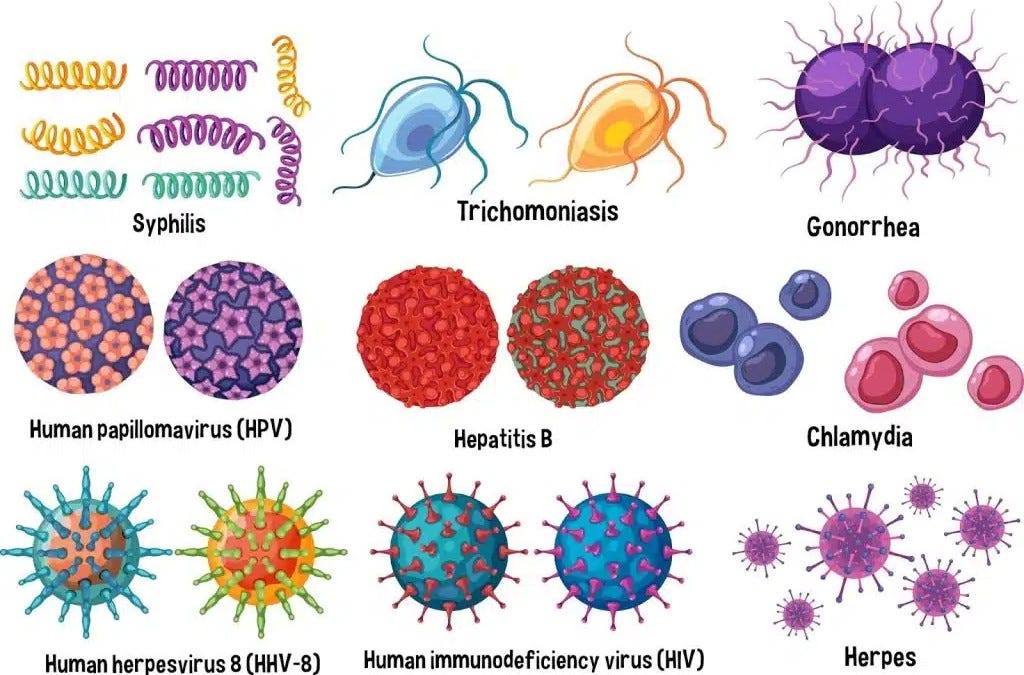
While research is still developing in this area, it does suggest that there are microbial and biological remnants of intimate partnerships that may stay with us longer than we might expect, even if not indefinitely. This evidence indicates that our sexual history can leave lasting microbial and biological impacts. Research suggests that intimate physical contact, particularly sexual contact, can lead to the transfer of microbes that may persist on and within the body. Here are some key points to consider:
- Microbial Transfer: Studies have shown that sexual partners exchange bacteria and other microorganisms that can stay in the body. For instance, microbes from a partner’s skin, oral cavity, and genital microbiome can colonize the other partner’s body. In some cases, these microbes can remain and even affect the receiving partner’s microbiome balance for a period after the relationship has ended.
- Genetic Material Transfer: Beyond microbes, emerging evidence suggests that small amounts of DNA from partners might persist temporarily within the body. This includes trace amounts of male DNA found in female reproductive tissues, though the implications are still being researched.
- Immune System Memory: Sexual activity can stimulate the immune system, leading it to “remember” certain antigens associated with past partners. While this isn’t as permanent as microbial transfer, it can affect how the immune system reacts to similar exposures in the future.
- Impact on the Microbiome: The microbiome is sensitive to various factors, including lifestyle, diet, and sexual behavior. Sexual relationships can shift an individual’s microbial composition, potentially in ways that may not fully revert after a relationship ends, although it is generally thought that the microbiome stabilizes over time.
- Viral and Pathogen Transfer: Some viruses and pathogens, like HPV (human papillomavirus), herpes, and other sexually transmitted infections, can remain in the body permanently once contracted. While these are not typically part of the healthy microbiome, they are a form of biological legacy from past partners that can remain lifelong.
- Epigenetic Impacts: There is emerging research into how intimate and social interactions, including sexual relationships, can influence gene expression through epigenetic mechanisms, which are changes in gene activity that don’t alter the DNA sequence but can still have biological effects. For example, some animal studies have shown that social and environmental exposures can affect offspring even when DNA isn’t directly altered. While the extent of this in humans is less understood, it’s an area of growing interest.
- Hormonal and Psychological Effects: Sexual relationships can have lasting impacts on hormone levels and psychological states. The release of hormones like oxytocin and vasopressin during intimate encounters can influence emotional bonds and stress responses, potentially affecting how we relate to future partners. Although these effects are more psychological than microbial, they do play a significant role in our physiology and interpersonal behavior.
- Seminal Microchimerism: There is a rare phenomenon called microchimerism, where a small number of cells from one individual persist in the body of another. Some studies have found that women can carry male DNA in their bodies (often from male fetuses, but potentially also from sexual partners), although the duration and biological significance of this is still debated.
In summary, while much of the microbial and genetic legacy from past partners may diminish over time, certain effects — microbial shifts, viral presence, epigenetic changes, and psychological impacts — can linger, potentially influencing health and relationships long-term. This underscores how intimate relationships create more than just temporary connections; they can leave traces that persist on various levels, some lasting longer than others.
Recovering From Infidelity
If you have experienced infidelity-induced trauma caused by the emotional and sexual betrayal of your spouse, there is hope! If you are a child affected by parental infidelity, there is hope! There is hope if you are a spouse who has betrayed your marriage’s trust, love, and fidelity! We recommend that you seek support through professional counseling and therapy as well as through groups dedicated to supporting you through this traumatic journey. You are not alone and recovery and healing are possible!
Share Your Story
The CHADIE Foundation shares personal stories of spouses and children impacted by infidelity and affairs. If you have a story you would like to share and have published, please use the contact information below to share your story with The CHADIE Foundation. Our mission is to help educate everyone about the damage infidelity, affairs, and adultery cause families and how to minimize the impact.
About CHADIE Foundation
The CHADIE Foundation (Children are Harmed by Adultery, Divorce, Infidelity, and related Emotional trauma), helps spouses, partners, and children who adultery, affairs, and infidelity have negatively impacted. To learn more about CHADIE and how you can help, please email us at support@chadie.org or visit us at CHADIE.org.
 The CHADIE Foundation